· Philosophy · 8 min read
Who am I when the machines do the work?
The Jetsons imagined a future where machines work and people live. What happens to expertise, authorship, and livelihood when the work really can be handed over?
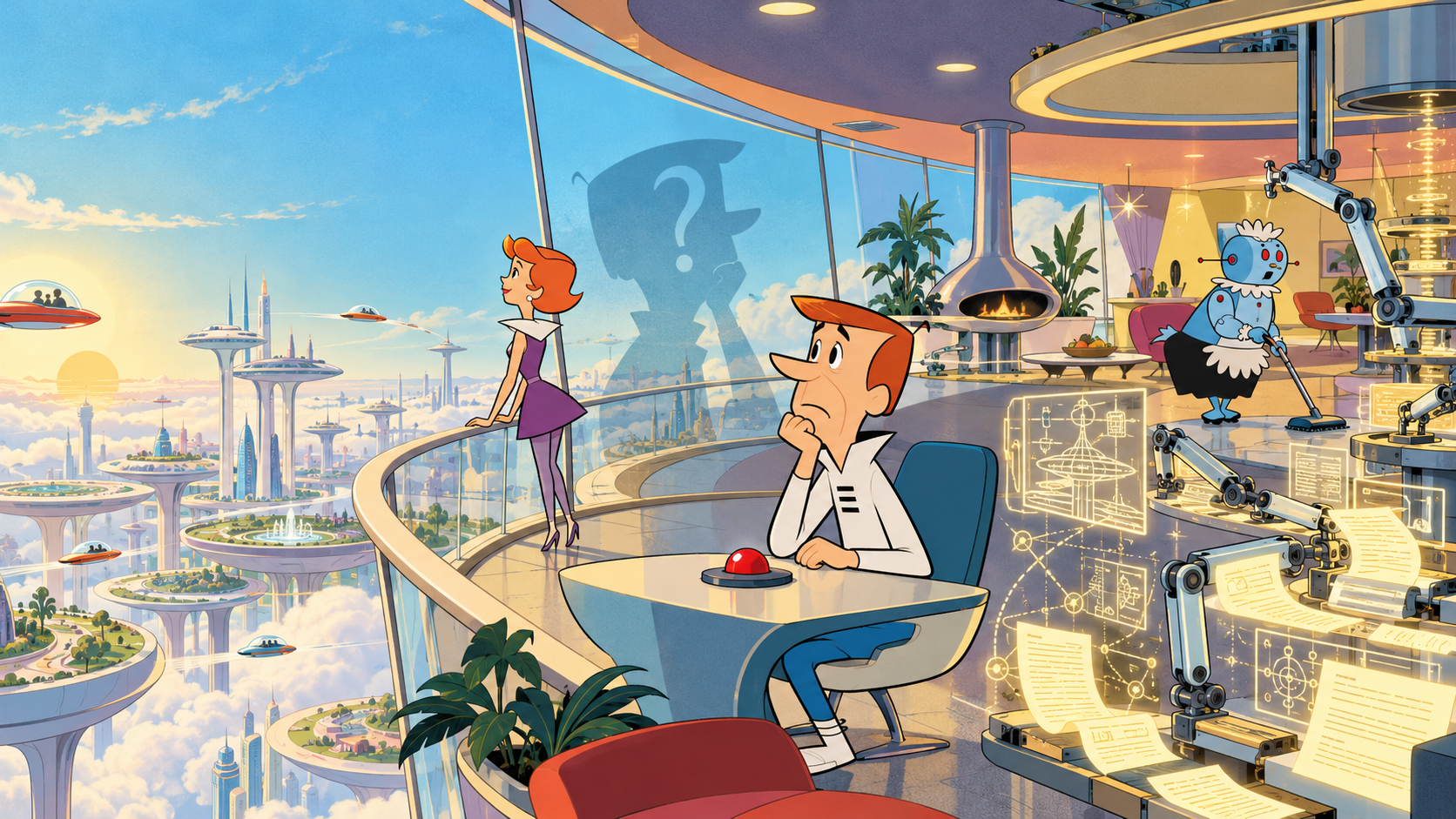
The Jetsons was a cartoon from the 60s that depicted a family living in the future. George, the patriarch of the family, worked 1 hour a day for 2 days a week. The work mainly involved pressing buttons while machines did all the work. The matriarch, Jane Jetson, was in control of the household. In practice, however, Rosey, the maid, did everything. The cartoon painted a bright future where humans were mainly just living life rather than commuting and sitting behind a desk all day. This dream is older than the cartoon: in 1930, John Maynard Keynes speculated that his grandchildren’s generation could get by on a fifteen-hour week1. I have been thinking a lot about this depiction of the future, especially in light of the news around AI.
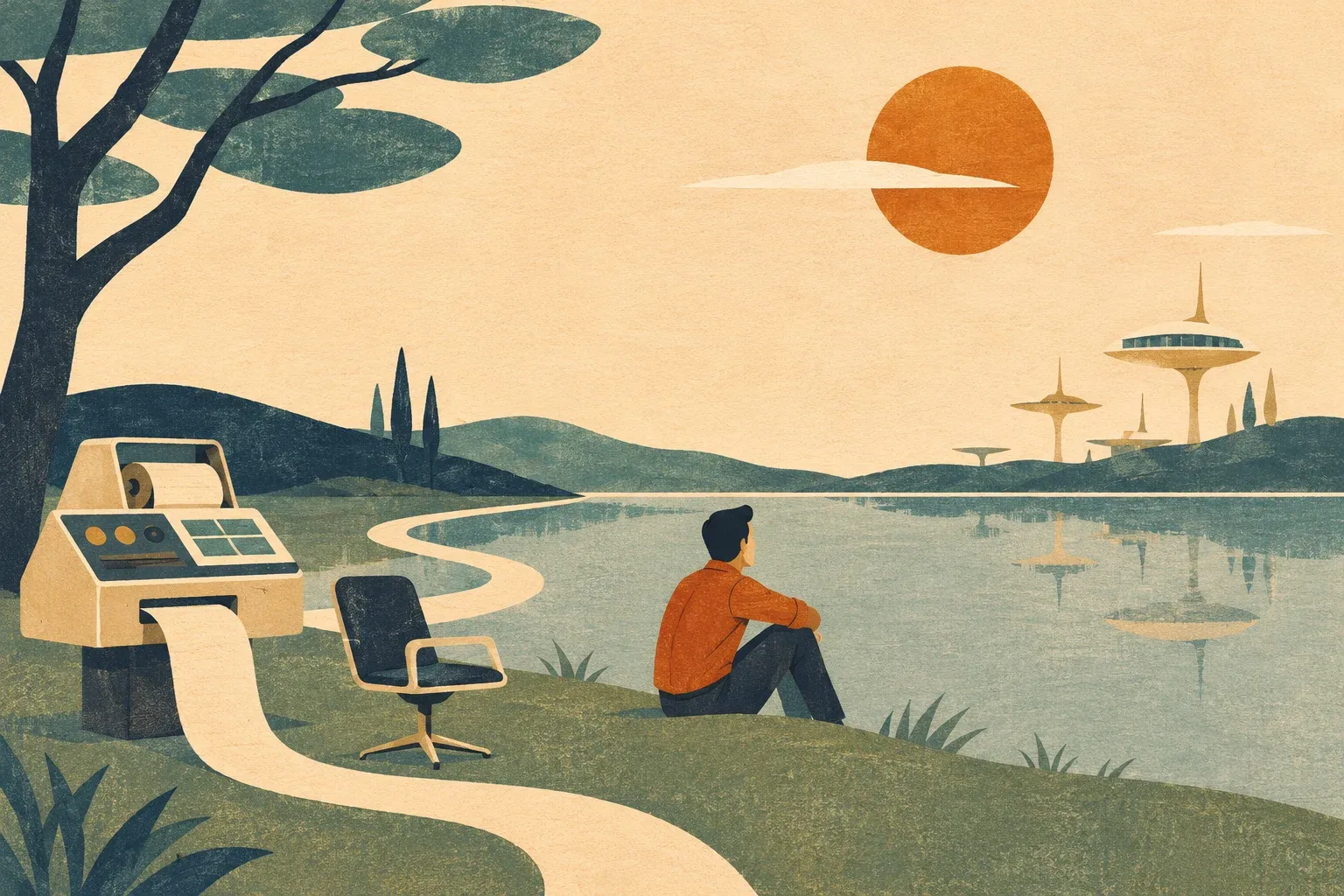
The machine keeps working. The afternoon belongs to us.
The last couple of years can be considered the industrial revolution of the mind – where we created a machine that can operate within modern society and seemingly provide human-level performance. While the initial pitch for the AI boom was to replace actual humans with software, 4 years in, we have yet to see full replacement at the human level. In fact, we are seeing signs that real-world adoption is stalling everywhere but in the software development corners of the economy.
What the Jetsons showed is that the endgame of human development would be one in which mostly machines rule the world, and we merely exist or supervise mildly. The talk around AI includes a lot of hype, misunderstanding of the techniques used, and overextrapolation of capabilities that it simply does not have.
Setting those aside, we are left with more fundamental issues regarding the sense of ownership or intellectual property, and, in the long term, how humans fit into this story.
Most would probably agree that if some AI found a cure for all cancers tomorrow, and could extend our lives by 200 percent, we would not complain about the usefulness and importance of this new technology. So what then is the issue?
Well, within any economic market, there is value to be had in optimizing that market. We want more for less, and if AI can effectively work for free, then your job is up for grabs. The speed at which this technology is being developed and the looming fear of that possibility are what cause the issue. If we thought like the Jetsons, we would just let the machine work while we go for a hike or hang out by the lake. Instead, we live in a world where my contribution depends on producing value for someone else. Karl Polanyi argued that treating human labor as a market commodity was a historical development rather than a natural state of affairs2.
This creates an issue, as my capabilities as a human change during the course of my lifetime. The beginning is filled with growth and discovery, then it refines and refines, until expertise develops in some capacity. By expertise, I do not mean narrow knowledge or skills, but some sort of capability that is non-trivial for someone to just pick up – which may include narrow skills or knowledge. This becomes valuable if those skills are wanted by others.
When the speed at which someone else can gain that knowledge erodes my usefulness to society, and therefore possibly my livelihood, this becomes a problem. The economic systems we developed are not Jetson-like but value-additive, and therein lies the rub.
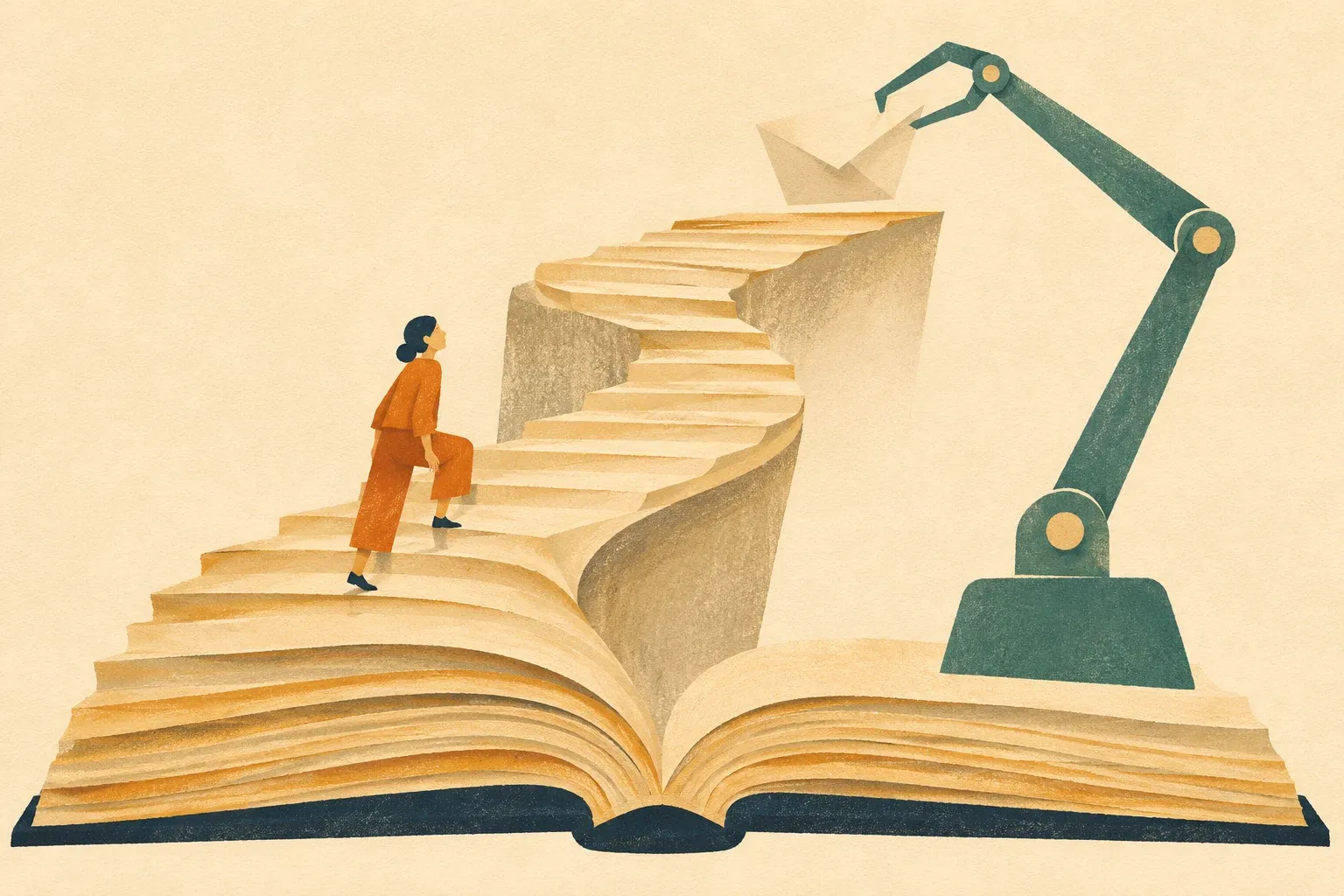
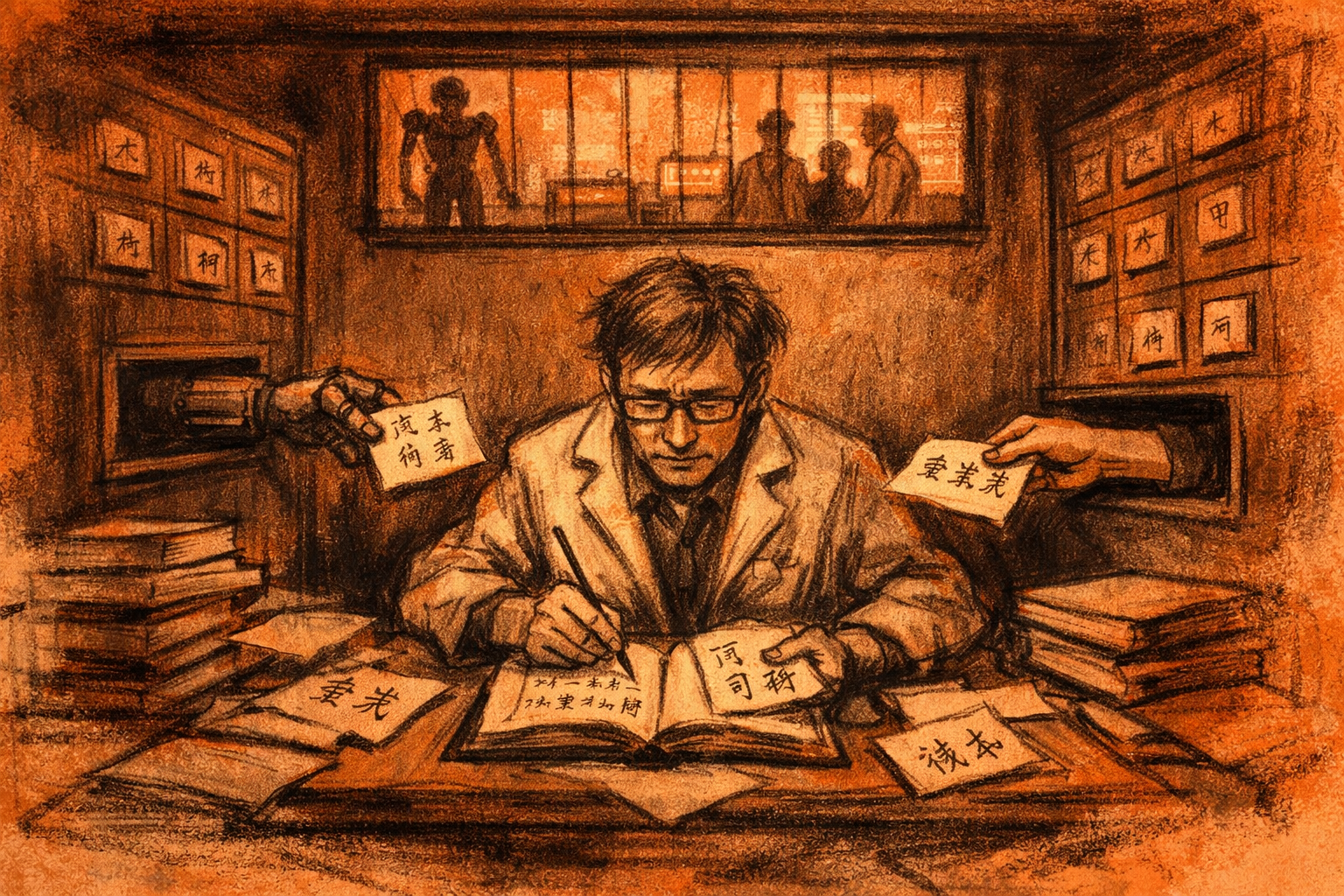
Expertise takes time to build. What happens when the output can arrive without the climb?
Another issue I see is that authorship also conflicts with a sense of growing expertise. I would like to see my command over a particular field increase, becoming non-trivial and therefore valuable. While for me this is guided by my curiosity and desire to understand, it has side effects that I naturally cannot ignore. Currently, AI is not capable of being the expert in the room. However, it is being used as an outside perspective. It is consulted on issues and used for making new decisions. While I think there is no doubt that AI is very successful at writing code, it feels strange to claim authorship over a piece of code or a feature that an AI implemented. John Locke tied ownership to the labor we mix into something3, and Norton and colleagues found that people value what they built themselves more highly4.
Linus Torvalds stated that using AI is similar to working with a compiler. A compiler is a piece of software that turns human-readable code into a language that can talk to the hardware of your computer. Most people know what a compiler does at some level, but fewer people know how a compiler produces the output that it does. AI works similarly but at a broader level. It can be used for something I call soft programming, i.e. a novice can talk to AI in pseudocode and it will perform the task on their computer. Instead of manually relabeling your photos from your vacation in Spain, you can have an AI do that in less time.
The use of AI (or I should say LLMs) thus opens the door for anyone to wield automation power. Just as the industrial revolution opened the door to mass production, LLMs allow everyone to automate their life in a way, moving the needle closer to the Jetsons’ bright future.
However, that is not how it seems currently. While any technology has the potential to be used by malicious actors to destroy, disrupt and create havoc, that same technology can often be used to create good.
AI is here to stay, so who am I in this picture? Why does it feel different when I use a calculator to compute something, compared to when an AI performs an editorial pass over the text I just wrote? This, I think, is the biggest enigma.
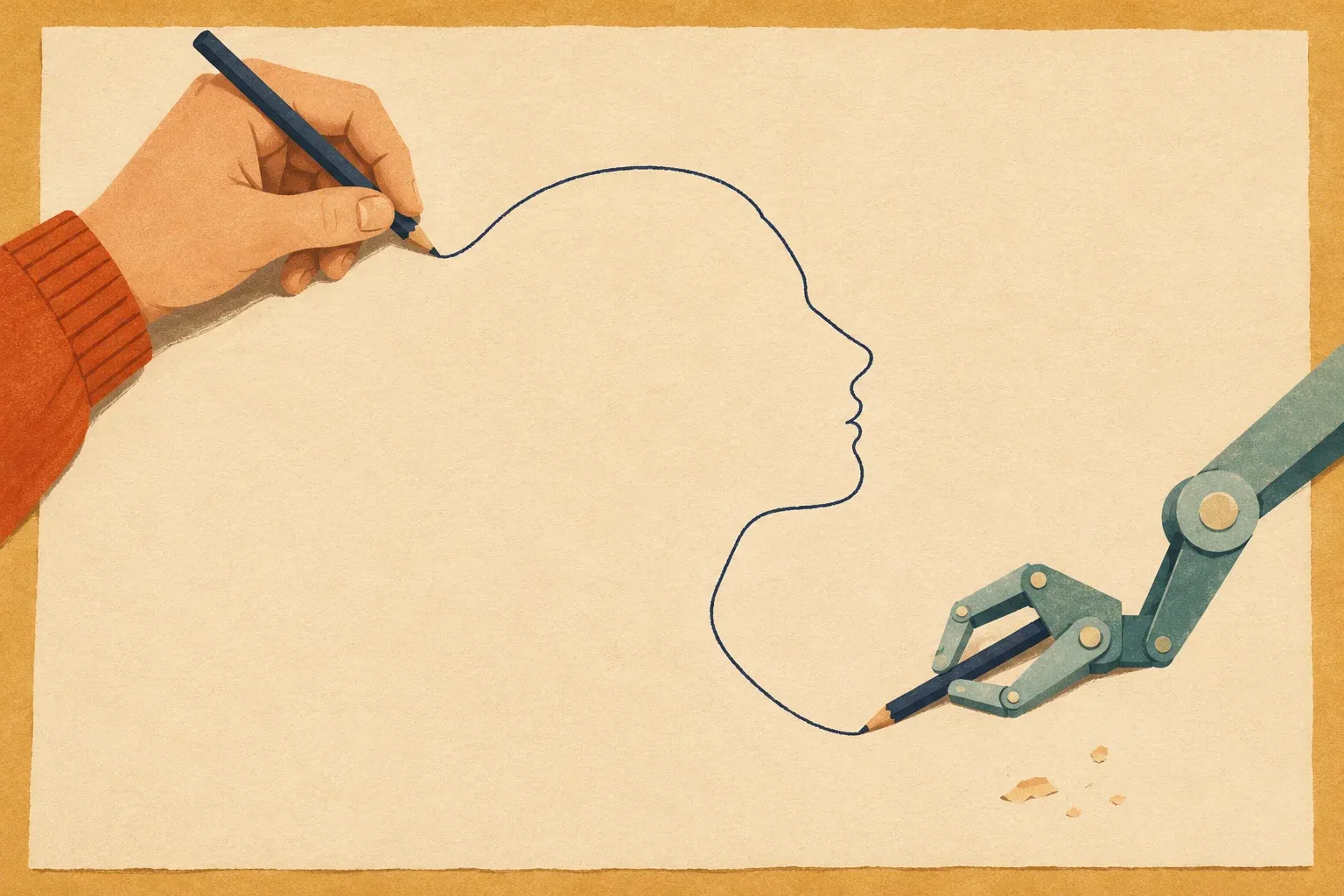
When we share the making, what makes the work mine?
I have no interest (necessarily) in understanding how a compiler produced the machine code that my computer can use, or, taking it even further, how the spins of electrons come together in the transistor to store a bit – unless it matters for what I am working on or need to understand. As Alfred North Whitehead put it in 1911, “Civilization advances by extending the number of important operations which we can perform without thinking about them”5. If the machine code being produced is causing bugs, we need to be able to probe what is going on. Lisanne Bainbridge saw the irony here: an experienced operator who only monitors an automated process can end up inexperienced when called on to take over6. Whether this question is answered by me or some guy on Stack Overflow (remember that?) is irrelevant; it gets my understanding, my mind, further. I see the usage of AI as a tool, a tool for human understanding.
If we reach a point where we can sit back and relax because there is no need for humans to do jobs, then so be it. But this would require a shift in our understanding of what value is. Hannah Arendt warned of this in 1958, describing the prospect of “a society of laborers without labor”7. If AI becomes good at replacing someone else’s job, it is not enough to say “well, that job was not worth it anyway”. It requires serious discussion of where our values are and how we should support those whose bottom line is affected by this.
We are human meatbags who cannot learn kung fu by downloading a cassette tape into our brains1; we require time and training, and this capability will change over the course of a lifetime. Psychologists have long distinguished fluid intelligence, which tends to decline in adulthood, from crystallized intelligence, which tends to build up with experience8. I think the responsibility should not merely rest on the shoulders of the individual, or on “just learn how to code” as was said in the past. When Chinese import competition hit local labor markets in the United States, wages and participation stayed depressed for at least a decade9. It requires a fundamental discussion of identity and economic transformation, which the world is currently not equipped to handle at all.
What is curious about the Jetsons is that it aired decades after the political arrow stopped pointing towards shorter hours. In a way, the cartoon reminds us of the future that could have been, after policy had turned its back on it.
Show references
References
- 1.
Keynes, John Maynard (1930). Economic Possibilities for our Grandchildren. The Nation and Athenaeum. Link
- 2.
Polanyi, Karl (1944). The Great Transformation. Farrar \& Rinehart
- 3.
Locke, John (1689). Two Treatises of Government. Awnsham Churchill
- 4.
Norton, Michael I., Mochon, Daniel, Ariely, Dan (2012). The IKEA effect: When labor leads to love. Journal of Consumer Psychology, 22(3), 453–460. Link
- 5.
Whitehead, Alfred North (1911). An Introduction to Mathematics. Henry Holt
- 6.
Bainbridge, Lisanne (1983). Ironies of automation. Automatica, 19(6), 775–779. Link
- 7.
Arendt, Hannah (1958). The Human Condition. University of Chicago Press
- 8.
Horn, John L., Cattell, Raymond B. (1967). Age differences in fluid and crystallized intelligence. Acta Psychologica, 26, 107–129. Link
- 9.
Autor, David H., Dorn, David, Hanson, Gordon H. (2016). The China Shock: Learning from Labor-Market Adjustment to Large Changes in Trade. Annual Review of Economics, 8, 205–240. Link
Footnotes
In The Matrix (1999), directed by the Wachowskis, Neo has kung fu uploaded directly into his brain. ↩

Join the conversation
Comments